Showing posts with label Science and Technology News. Show all posts

Thursday, 24 November 2022

iCloud glitch sends users pictures to strangers accounts

Microsoft recently launched the iCloud for Windows app, which allows users to connect their iCloud accounts with the Photos app on their PCs. This app has already developed a glitch and a pretty serious one at that. According to users who have posted on the MacRumors Forum, the glitch sends users pictures to strangers’ accounts. 

What is the iCloud for Windows glitch?

Users reported receiving strangers’ pictures in their accounts and also reported that their pictures were not being uploaded to the right accounts. Some users have also reported that they received corrupted videos that showed scan lines on a black screen. These issues were thrown into the limelight as early as November 17, which was just a week after Microsoft launched the new app.

What is the iCloud for Windows app?

The iCloud for Windows app has been created to allow users to consolidate all their content and storage options in one place. This means that content from cameras, OneDrive, and iCloud Photos would all be available in the same app. The main USP of the app is that it lets you access Apple’s iCloud storage, making it convenient for users who own Apple iPhones, but not an Apple laptops. 

The photos from different sources are all placed in their own pre-labeled folders for easy identification. However, if you’re using Windows 11, you’ll see all the content in a single gallery-like display.

A user on the MacRumors Forum tested the glitch on multiple devices to ensure that this was not a device-related error. The user utilised a laptop with Windows 10 Pro and two with Windows 11 Pro and experienced the same glitch every time He also tested the glitch on different Apple devices like the Apple iPhone 13 Pro Max, Apple iPhone 11 Pro, and an iPad. 

For more technology news, product reviews, sci-tech features and updates, keep reading Digit.in or head to our Google News page. 


from Science and Technology News https://ift.tt/GOJKakY

Friday, 11 November 2022

On World Pneumonia Day, new technologies are helping save lives

Today is World Pneumonia Day, throwing light on a respiratory condition that’s threatening to get more acute in a world with the increasing pollution, among other things.

In medical terms, pneumonia is a form of respiratory ailment, an infection caused in the air sacs of the lungs due to various reasons. The World Health Organization blames pneumonia as the number one cause of infectious deaths in children worldwide.

According to reports, just in 2019 alone, pneumonia claimed the lives of 2.5 million, including 672,000 children. That was before the effects of the COVID-19 pandemic kicked in, which further worsened the global respiratory health situation as we all know. As a result, the estimated number of deaths from respiratory infections like pneumonia, including COVID-19, was 6 million in 2021.

Suffice to say that pneumonia is one of the most challenging respiratory conditions that humanity needs to find a way to eliminate. How is technology helping clinicians and medical researchers help reduce pneumonia-related deaths in the world?

Pneumoscope - an intelligent stethoscope

Back in November 2020, Swiss-made Pneumoscope debuted at the Geneva Health Forum – it’s an intelligent stethoscope that can diagnose pneumonia in as little as seven minutes. This pneumonia-hunting smart stethoscope is aimed at medical practitioners in low-and-middle-income countries, according to researchers.

The current Pneumoscope prototype can diagnose in just seven minutes common forms of pneumonia, one of the leading causes of death for children under the age of five, and we hope to see such new technological advancements help in the early diagnosis of pneumonia to reduce fatalities in the long term.

Sound-based AI diagnosis of pneumonia

Imagine a device running an AI algorithm trained on identifying the subtle acoustic differences of breathing through a pneumonia-infected lung versus a normal lung, for the immediate identification of pneumonia and saving lives. 

That’s exactly what the Pneumonia Etiology Research for Child Health study or PERCH, a project funded by The Bill and Melinda Gates Foundation is currently developing across seven countries throughout Africa and Asia.  

Using digital stethoscopes to record chest sounds from children hospitalized with life-threatening pneumonia, audio signals are uploaded online and studied by co-investigators at The Johns Hopkins School of Public Health International Vaccine Access Center and the Johns Hopkins University Engineering Department. They’re in turn helping build AI algorithms that can interpret these sounds and therefore accurately diagnose childhood respiratory illness. 

For more technology news, product reviews, sci-tech features and updates, keep reading Digit.in.


from Science and Technology News https://ift.tt/9SnwpaA

Saturday, 8 October 2022

Apple A16 Bionic costs more than twice to manufacture compared to A15

Tokyo, Oct 8 (IANS) The A16 Bionic chip in iPhone 14 Pro models costs $110 to manufacture, which is 2.4 times more than A15 chip in iPhone 14 models.

A Nikkei teardown of Apple's iPhone 14 series models revealed that production costs jumped nearly 20 per cent from its previous iPhone generation which is an all-time high.

"The company has not raised prices for its latest model in the US and some other markets, but higher production costs mean that the company's profit margin has likely shrunk," the report mentioned on Friday.

The production of iPhone 14 Pro Max costs Apple $501, up more than $60 from iPhone 13 Pro Max.

The higher production cost is reportedly due to the A16 Bionic chips in the iPhone 14 Pro models.

According to the report, Parts for the iPhone 14 primarily come from US suppliers, accounting for 32.4 per cent of costs.

Apple raised iPhone prices in some countries, such as Japan and Australia, but not in the US and other markets owing to foreign exchange rates as the US dollar has been very strong this year.

The A16 Bionic chip in iPhone 14 Pro and iPhone 14 Pro Max offers experiences like the Dynamic Island, powers all-day battery life, and delivers impressive computational photography capabilities.

With two high-performance cores and four high-efficiency cores, the new 6-core CPU is up to 40 per cent faster than the competition and easily handles demanding workloads. A16 Bionic features an accelerated 5-core GPU with 50 percent more memory bandwidth -- perfect for graphics-intensive games and apps -- and a new 16-core Neural Engine capable of nearly 17 trillion operations per second, according to Apple.

The CPU, GPU, Neural Engine and image signal processor seamlessly work together to support the new camera hardware and perform up to 4 trillion operations per photo.

For more technology news, product reviews, sci-tech features and updates, keep reading Digit.in.


from Science and Technology News https://ift.tt/UkPXVbz

Monday, 26 September 2022

Watch the NASA DART mission whereby a spacecraft hits an asteroid: Find out what happened and why

After 10 months of flying in space, NASA's Double Asteroid Redirection Test (DART) -- the world's first planetary defence technology demonstration -- successfully impacted its asteroid target, the agency's first attempt to move an asteroid in space.

Mission control at the Johns Hopkins Applied Physics Laboratory (APL) in Laurel, Maryland, announced the successful impact at 7.14 p.m. EDT on Monday.

"At its core, DART represents an unprecedented success for planetary defence, but it is also a mission of unity with a real benefit for all humanity," NASA Administrator Bill Nelson, said in a statement.

"As NASA studies the cosmos and our home planet, we are also working to protect that home, and this international collaboration turned science fiction into science fact, demonstrating one way to protect Earth," Nelson added.

As a part of NASA's overall planetary defence strategy, DART's impact with the asteroid Dimorphos demonstrates a viable mitigation technique for protecting the planet from an Earth-bound asteroid or comet.

DART targeted the asteroid moonlet Dimorphos, a small body just 530 feet (160 meters) in diameter. It orbits a larger, 2,560-foot (780-meter) asteroid called Didymos. Neither asteroid poses a threat to Earth.

The mission's one-way trip confirmed NASA can successfully navigate a spacecraft to intentionally collide with an asteroid to deflect it, a technique known as kinetic impact.

The investigation team will now observe Dimorphos using ground-based telescopes to confirm that DART's impact altered the asteroid's orbit around Didymos.

Researchers expect the impact to shorten Dimorphos' orbit by about 1 per cent, or roughly 10 minutes; precisely measuring how much the asteroid was deflected is one of the primary purposes of the full-scale test.

(Except for the headline and cover image, the rest of this IANS article is un-edited)

For more technology news, product reviews, sci-tech features and updates, keep reading Digit.in.


from Science and Technology News https://ift.tt/Kt0u8PO

Saturday, 17 September 2022

You can catch Jupiters closest date with Earth in 70 years on Sep 26

Washington, Sep 17 (IANS) Jupiter is set to make its closest approach to Earth in the last 70 years and on September 26, stargazers can expect an excellent view when the giant planet reaches opposition.

From the viewpoint of Earth's surface, opposition happens when an astronomical object rises in the east as the Sun sets in the west, placing the object and the Sun on opposite sides of Earth.

Jupiter's opposition occurs every 13 months, making the planet appear larger and brighter than any other time of the year. But that's not all.

"Jupiter's closest approach to Earth rarely coincides with opposition, which means this year's views will be extraordinary," NASA said in a statement late on Friday.

At its closest approach, Jupiter will be approximately 365 million miles in distance from Earth.

The planet is approximately 600 million miles away from Earth at its farthest point.

"With good binoculars, the banding (at least the central band) and three or four of the Galilean satellites (moons) should be visible," said Adam Kobelski, a research astrophysicist at NASA's Marshall Space Flight Center in Huntsville, Alabama.

"It's important to remember that Galileo observed these moons with 17th century optics. One of the key needs will be a stable mount for whatever system you use," he noted.

Kobelski recommends a larger telescope to see Jupiter's Great Red Spot and bands in more detail -- a four inch-or-larger telescope and some filters in the green to blue range would enhance the visibility of these features.

According to Kobelski, an ideal viewing location will be at a high elevation in a dark and dry area.

Jupiter has 53 named moons, but scientists believe that 79 have been detected in total.

The four largest moons -- Io, Europa, Ganymede and Callisto -- are called the Galilean satellites.

NASA's Juno spacecraft, which has been orbiting Jupiter for six years, is dedicated to exploring the planet's surface and its moons.

Scientists believe studying Jupiter can lead to breakthrough discoveries about the formation of the solar system.

(Except for the headline, the rest of this IANS article is un-edited)

For more technology news, product reviews, sci-tech features and updates, keep reading Digit.in


from Science and Technology News https://ift.tt/zqyWbGf

Tuesday, 13 September 2022

Twitter had Chinese agent on payroll, India forced it to hire govt agents: Zatko

Washington, Sep 13 (IANS) Twitter whistleblower Peiter Zatko on Tuesday claimed that the Parag Agrawal-led platform hired a Chinese agent working for the country's Ministry of State Security (MSS), and reiterated that the Indian government also "forced" Twitter to hire government agents.

During a hearing with the US Senate Judiciary Committee, Twitter's former security chief said that Twitter's poor security practices harmed US national security, reports Engadget.

During the questioning, Republican Senator Chuck Grassley said that "the FBI notified Twitter of at least one Chinese agent in the company".

In his testimony, Zatko confirmed Twitter had been warned about the presence of Chinese agents.

Zatko also raised concerns about the presence of foreign agents from India which "forced" Twitter to hire government agents.

Grassley said that Twitter CEO should step down if Zatko's allegations are proven.

"I don't see how Mr. Agrawal can maintain his position at Twitter" if Zatko's claims turn out to be accurate, he said.

According to Grassley, Twitter declined to make Agrawal available amid its concerns that his testimony could jeopardise the company's ongoing legal battle with Tesla CEO Elon Musk, reports CNN.

In a hearing that lasted more than two hours, Zatko told lawmakers that Twitter is extremely vulnerable to being penetrated and exploited by agents of foreign governments.

"Zatko said that Twitter was not afraid of the US Federal Trade Commission as much as it feared actions by foreign regulators, such as France's data protection authority, CNIL," the report mentioned.

Zatko also alleged that Twitter does not fully understand all of the user data it collects, why it is collected, and where it is stored.

(Except for the headline, the rest of this IANS article is un-edited)

For more technology news, product reviews, sci-tech features and updates, keep reading Digit.in


from Science and Technology News https://ift.tt/LlP0jyd

Monday, 5 September 2022

A 260-foot Asteroid thats 10x faster than a bullet to zip past Earth: Should we be worried

A small supersonic asteroid, travelling at ten times the speed of a bullet, will pass by the Earth on Tuesday, media reports said. The asteroid has been given the designation 2022 QC7 and it is not too big, with a width ranging from just 16 metres to 36 metres, according to the Center for Near-Earth Object Studies (CNEOS) at NASA's Jet Propulsion Laboratory (JPL), The Jerusalem Post reported. For comparison, 36 metrrs is around half the wingspan of a Boeing 767 jet plane, the report said. But asteroid 2022 QC7 is also coming in fast, barreling in Earth's direction at a speed of around 9.10 kilometers per second, or 32,760 kilometers per hour. To put that in perspective, that is about 10 times as fast as an average 5.56 x 45 mm NATO rifle bullet and is the equivalent of close to 27 times the speed of sound. NASA has made it clear that asteroid 2022 QC7 has essentially no chance of hitting the Earth, and is set to pass at a distance of over 4.6 million kilometers away. Considering the Moon orbits the Earth at an average distance of 384,000 kilometers, this is much farther -- albeit not too far on a cosmic scale. However, even if asteroid 2022 QC7 did manage to hit the Earth, it would not do much. According to research from the Davidson Institute of Science, the educational arm of Israel's Weizmann Institute of Science, an asteroid, 140 metres in diameter or more, would release an amount of energy at least a thousand times greater than that released by the first atomic bomb if it impacted Earth.

(Except for the headline and cover image, the rest of this IANS article is un-edited)

For more technology news, product reviews, sci-tech features and updates, keep reading Digit.in.


from Science and Technology News https://ift.tt/JUehEip

Sunday, 4 September 2022

Elon Musk suggests a solution for the NASA Artemis I leak problem: What is it

As NASA scrubbed the Artemis 1 uncrewed mission to the Moon once again, Tesla and SpaceX CEO Elon Musk on Sunday came up with a suggestion for the ailing mission that will finally land astronauts on the lunar surface after decades. NASA engineers could not overcome a hydrogen leak in a 'quick disconnect' phase of the Space Launch System (SLS) rocket launch on Saturday. According to Eric Berger of Ars Technica, NASA has a tolerance for a small amount of hydrogen leakage and anything above a 4 per cent concentration of hydrogen near the 'quick disconnect' is considered a flammability hazard. Musk replied to Berger's 'accurate assessment', saying that "Raptor design started out using H2 (hydrogen), but switched to CH4 (hydrogen). Latter is the best combo of high efficiency and ease of operation in my opinion." "Delta-v difference between H2 and CH4 is small for most missions, because the CH4 tank is much smaller & no insulation is needed," Musk explained. The delta-v is the difference of velocity that a rocket engine can impose on a spacecraft as a function of the specific impulse and the variation in the mass of the vehicle itself. According to him, CH4 (methane) is easier to produce on Mars and is "very important" for launch missions. SpaceX is among the first companies to use liquid methane and hydrogen as fuel. Musk also hopes for a self-sustaining city on the Red Planet in 20 years' time, as his space company prepares the Starship mega rocket to take people and cargo to the moon, Mars and beyond. According to the report, The NASA showstopper "was an 8-inch diameter line carrying liquid hydrogen into the rocket. It sprung a persistent leak at the inlet, known as a quick-disconnect, leading on board the vehicle". NASA will next have the launch window from September 19 to October 4. "However, making that window would necessitate fixing the rocket at the pad, and then getting a waiver from the US Space Force, which operates the launch range along the Florida coast," said the report. The space agency has another Artemis I launch opportunity from October 17 to October 31.

(Except for the headline and cover image, the rest of this IANS article is un-edited)

For more technology news, product reviews, sci-tech features and updates, keep reading Digit.in.


from Science and Technology News https://ift.tt/GK5ZjMb

Saturday, 3 September 2022

NASA Artemis I launch has been delayed again: Know what happened

The US space agency on Saturday once again scrubbed the Artemis I Moon mission launch attempt after it encountered a liquid hydrogen leak while loading the propellant into the core stage of the Space Launch System rocket. Multiple troubleshooting efforts to address the area of the leak by reseating a seal in the quick disconnect where liquid hydrogen is fed into the rocket did not fix the issue. Engineers were continuing to gather additional data, said NASA. Artemis I is a flight test to launch NASA's Space Launch System rocket and an uncrewed Orion spacecraft around the Moon before the Artemis II mission with astronauts aboard. Through Artemis missions, NASA will land the first woman and the first person of colour on the Moon, paving the way for a long-term lunar presence and serving as a steppingstone to send astronauts to Mars. The US space agency on August 30 scrubbed the mission launch for the first time owing to technical glitch with one of the Space Launch System (SLS) rocket's engines. Teams saw a hydrogen leak on a component of the tail service mast umbilical quick disconnect, called the purge can, and managed the leak by manually adjusting propellant flow rates. The Artemis I launch is part of a larger space programme to take astronauts back to the moon sometime after 2025. A first round trip test mission is to take place in about 42 days.

(Except for the headline and cover image, the rest of this IANS article is un-edited)

For more technology news, product reviews, sci-tech features and updates, keep reading Digit.in.


from Science and Technology News https://ift.tt/5sKDJWd

Saturday, 27 August 2022

American researchers develop durable coating that kills Covid virus

New York, Aug 27 (IANS) There may soon be a new weapon in the battle against Covid in the form of a durable coating, thanks to Indian-American researchers, that can quickly kill bacteria and viruses on surfaces, and keep killing them for six months or longer.

The coating, which is clear and can be brushed or sprayed on, gets its durability and germ-killing power by combining tried-and-true ingredients in a novel way.

It uses antimicrobial molecules derived from tea tree oil and cinnamon oil, both used for centuries as safe and effective germ killers that work in under two minutes, according to the study led by Anish Tuteja, a professor of material science and engineering at University of Michigan, published in the journal Matter.

"Disinfectant cleaners can kill germs in only a minute or two but they dissipate quickly and leave surfaces vulnerable to reinfection. We do have long-lasting antibacterial surfaces based on metals like copper and zinc, but they take hours to kill bacteria. This coating offers the best of both worlds," said Tuteja.

The research team included associate professor of materials science and engineering and biomedical engineering, Geeta Mehta and materials science and engineering PhD students Abhishek Dhyani and Taylor Repetto.

The coating's durability comes from polyurethane, a tough, varnish-like sealer that's commonly used on surfaces like floors and furniture.

The coating proved deadly to SARS-CoV-2 virus, E. coli, MRSA and a variety of other pathogens.

It killed 99.9 per cent of microbes even after months of repeated cleaning, abrasion and other punishment on real-world surfaces like keyboards, cell phone screens and chicken-slathered cutting boards.

The coating could be a game changer in traditionally germ-laden public spaces like airports and hospitals.

"The antimicrobials we tested are classified as 'generally regarded as safe' by the FDA, and some have even been approved as food additives," Tuteja said.

"Polyurethane is a safe and very commonly used coating. But we did do toxicity testing just to be sure, and we found that our particular combination of ingredients is even safer than many of today's antimicrobials," he mentioned.

The coating could keep killing germs for six months or longer before its oil begins to evaporate and reduce its disinfectant power.

But even then, said Tuteja, it can be recharged by wiping it with fresh oil; the new oil is reabsorbed by the surface, starting the cycle again.

Tuteja estimates that the technology could be commercially available within a year, as it has been licensed to Hygratek, a spinoff company that Tuteja founded with assistance from Innovation Partnerships at the university.

The University of Michigan has applied for a patent based on this technology.

(Except for the headline, the rest of this IANS article is un-edited)

For more technology news, product reviews, sci-tech features and updates, keep reading Digit.in


from Science and Technology News https://ift.tt/8lu5ZLt

Tuesday, 25 January 2022

NASA is now offering a million dollars to keep astronauts well fed in its Deep Space Challenge

As we’ve stated many times, space travel is hard, like incredibly hard. The human body isn’t meant to be out under the stress of space travel…yet. In the past few years, scientists and researchers have looked at innovative and clever ways of keeping astronauts well-fed for long periods of space travel. Remember that in a spaceship, food is going to be limited, so how we make these resources last longer is paramount. To that end, NASA has just announced that the agency will pay upto a million dollars to anyone who comes up with the most ingenious and practical way of feeding astronauts in deep space. Basically, the project requires teams to think up ways of food production that can actually be replicated on a spaceship or another planet!

What's cookin'? Seriously, we want to know. Phase 2 of the Deep Space Food Challenge offers up to $1 million to teams who demonstrate food production technology for future long-term space missions, potentially benefitting people on Earth. Ready? Sign up: https://t.co/SYr3lbqkVq pic.twitter.com/zIBnnuAdKp

— NASA (@NASA) January 20, 2022 NASA tweets out its Deep Space Challenge 

In an official tweet, the agency states, “Phase 2 of the Deep Space Food Challenge offers up to $1 million to teams who demonstrate food production technology for future long-term space missions, potentially benefiting people on Earth.”. It is a bold plan and one that in tier words, will help streamline food production here on Earth. In a statement to the media, Jim Reuter, associate administrator for NASA's Space Technology Mission Directorate stressed that “Feeding astronauts over long periods within the constraints of space travel will require innovative solutions. Pushing the boundaries of food technology will keep future explorers healthy and could even help feed people here at home.”.

The real issue here is keeping food fresh and retention of nutritional value. Contestants will have to figure out how to streamline clean food production in space, all while maintaining taste, nutrition and hygiene. These technologies will also lead to a better understanding of how to manage food production here on Earth. As we race into the vast unknown of outer space, a man’s still gotta eat!

Also Read: Top NASA scientist says that we could terraform Mars using a magnetic shield


from Science and Technology News https://ift.tt/3nXienx

Monday, 3 January 2022

Elon Musk thinks that we could realistically transport humans to Mars in 5 years

Planetary space travel has always been an idea that has lingered in the realm of sci-fi. Sure, we may have set foot on the moon, but that was only once and has never been replicated again. But, with billionaires like Elon Musk and Jeff Bezos investing heavily in rocket technology, we could potentially experience space exploration in our lifetimes. In a recent interview on the Lex Friedman podcast, Musk talked about a wide range of topics such as AI, technology etc, but one thing that he stated really struck out. He mentioned that we could, in a best-case scenario, transport actual humans to the surface of Mars in about 5 years!

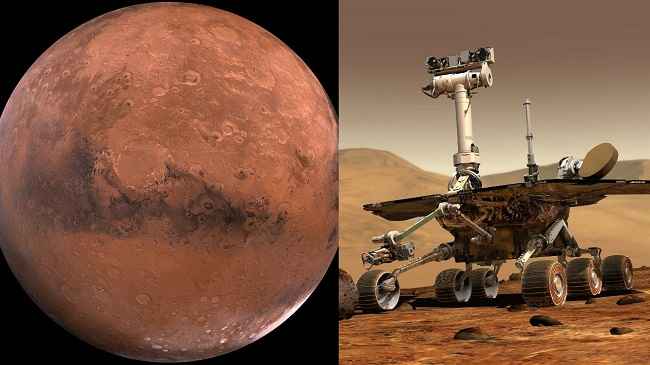
Mars rover

Humans on the surface of Mars in 5 years? 

We currently have 5 rovers on the surface of Mars. Called Sojourner, Spirit and Opportunity, Curiosity, and Perseverance, the rovers have been collecting data and sending back images of the red planet to earth. Technically, we humans already have a presence on Mars, so a future like the show The Expanse isn’t too far off in the future. As of right now, NASA has scheduled the Artemis 3 mission to the moon to launch in 2025, but with the state of the world, as it is, we’re not sure if the proposed launch will be able to stick to the deadline. But, travelling to the moon and to Mars are two very different undertakings. With the difference being, oh about 225 million km. Let that figure sink in. 

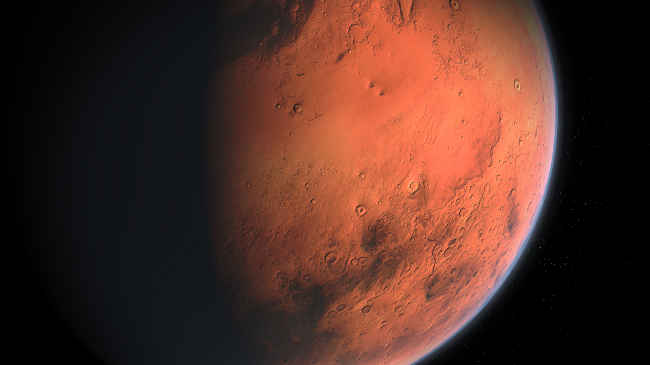
Elon Musk Space X Mars

We currently do not have the financial means of actually sending actual humans to Mars but according to Musk, if there are no delays or mishaps with the building of his Starship variant, we could see humans leave for Mars in the year 2026. But again, this isn’t as simple as strapping astronauts into a spaceship and letting it rip. The coordination, money, engineering, design, management and logistical systems all have to be ready to undertake a literal 225 million kilometre journey. Well, as the old saying goes, if we never try, we’ll never know. 

Also Read: Space Tourism Just Got It’s Newest Destination: The Moon!


from Science and Technology News https://ift.tt/3mUftTB

Thursday, 2 December 2021

Scientists have developed the worlds first living robots, bringing us one step closer to a sci-fi future

As if autonomous robots weren’t enough, scientists have now unveiled the worlds first living robots. What are living robots you ask? Living robots are essentially artificially created organisms that have the ability to reproduce and create more copies of themselves. And no, they’re not just clones that are replicating but are actually reproducing. Researchers have noticed that these living robots can jumpstart a bunch of single cells, building them into an approximation of the parent robot. Within a few days, these ‘offspring’ even start looking like their parents. It’s a breakthrough discovery that has major implications in the medical world and further. 

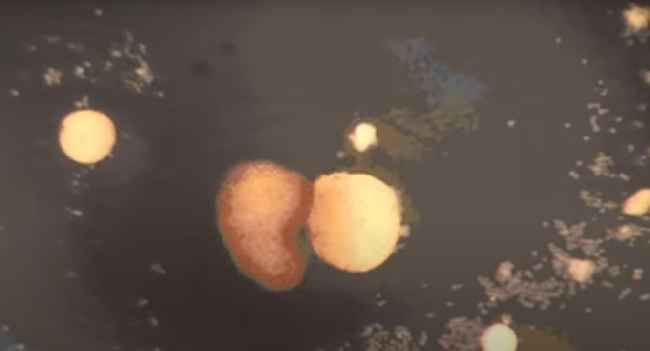
New Xenobots are world's first living robots

What are 'living robots'?

Called a Xenobot, the organism is built using organic material and not the usual metal robots that we’re used to seeing in popular media. Although a nanobot swarm is somewhat similar to what these Xenobots can achieve. But, not to fear though, most of these robots will be used to clean microplastics and administer precise medication. These are but just a few uses of these Xenobots. The researchers also stated, “If we knew how to tell collections of cells to do what we wanted them to do, ultimately, that’s regenerative medicine — that’s the solution to traumatic injury, birth defects, cancer, and ageing. All of these different problems are here because we don’t know how to predict and control what groups of cells are going to build. Xenobots are a new platform for teaching us.”. 

In terms of new medical technology, these Xenobots could change how we view modern medicine in terms of medication delivery and monitoring. It could also speed up healing in wounded patients and such. The applications of this kind of tech are limitless and if anything, the future is going to be rather strange and quite amazing. 

Also Read: A huge asteroid is moving toward Earth's orbital path


from Science and Technology News https://ift.tt/3ls92q8

Saturday, 25 September 2021

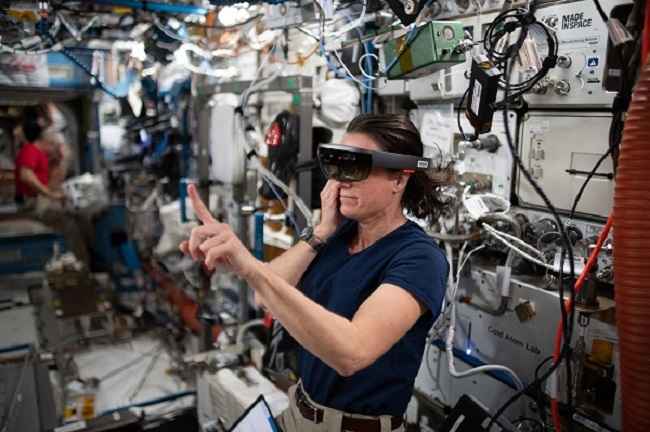
NASA to equip ISS crew with Augmented and Virtual Reality tech to help with repairs and maintenance in space

Augmented Reality is still in its nascent stages of development, but even at such an early stage, the applications and uses of this technology are moving beyond even the boundaries of the Earth. In a new report on the official NASA website, the space agency has stated that the astronauts aboard the International Space Station could soon be using AR to actually repair and perform maintenance on the space station. This will essentially bypass the need for astronauts to be in constant communication with ground control, freeing them up to focus on the task at hand. 

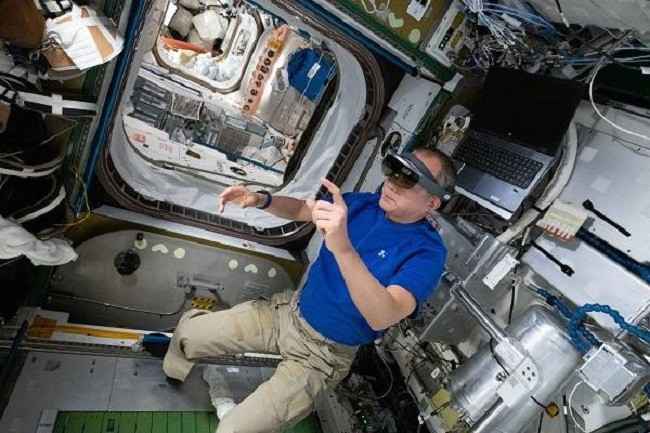
NASA astronauts using AR tech

From what we can see, the applications of this kind of technology are boundless as maintenance is a key component of space travel since you’re essentially stuck in the cold darkness of space with little to no real resources. So, keeping your spacecraft intact and function will be of utmost importance. Without the need for communication with ground control, astronauts will be able to make decisive and necessary decisions when it comes to repair or maintenance work. NASA's T2 Augmented Reality project will fit the astronaut with a pair or AR glasses that will display precise instructions on how to best navigate the problem. It will display 3D cues and could even display blueprints, giving astronauts a deeper understanding of the problem. 

NASA astronauts in ISS

In fact, on the official NASA blog, you can actually read all about how NASA is looking at taking AR and VR tech forward on the ISS and how the agency uses it in various ways. With space travel being a major leap for mankind, we can only hope that these new technologies ease our transition to a space-faring race of explorers. But, for now, we have to live vicariously through the brave men and women on the ISS. 

Also Read: NASA releases awe-inspiring image of a spiral galaxy taken by the Hubble Telescope


from Science and Technology News https://ift.tt/39Bnzt9